Showing posts with label education. Show all posts

Sunday, March 31, 2019

Learn! Create! Play?

All people want to learn.

All people want to create.

All people want to dig into ideas and discover what life has to offer.

All people want to experiment with materials and visions of what can be. 

All people want to play.

This is not a school thing. This is a human thing.

But what happens in school? As kids get older, this kind of exploration gets less relevant, because it gets less emphasized. Play disappears. The goal of learning shifts from doing, experiencing, and being active to watching, recalling, and being passive. A disconnect develops between being a learner and being a student, as if the former has nothing to do with the latter. It seems like schools stop viewing kids as people with natural curiosity, maybe even to the point that students stop trusting their own curiosity. The idea of play, so important for kids, is no longer considered to be a critical feature of the learning process.


Growth measured with tests, understanding quantified with a number, success and failure determined by a letter: these are the conventional ways to define learning. Ultimately, this status quo undermines the messy, exciting, intrinsically rewarding process of learning. After all, it's no longer about process; it's about the tests, the points, the grades. It ultimately makes me wonder:

Educators, parents, students: we all have a stake in considering this question. 


Tuesday, June 6, 2017

A Learner and A Teacher

Over the years, I have enjoyed acquiring a range of hobbies and interests: I like to cook; I like to play guitar; I like to make some art; I like to do yoga; I like to paddleboard. While I take these activities seriously, I have not done any of them enough to be an expert. I am not a chef. I am not a musician. I am not an artist.

So, is there anything that I do about which I feel like an expert? Probably not. But maybe I come closest when I consider my experience as a teacher and a learner.


Tuesday, August 23, 2016

The Best of Time and Place

In 2007, Eric Schlosser wrote a short piece called "The Freak Show." His aim: to show the variety of artists and events that contributed to his understanding of America and offer a brief perspective on the country.

Using his writing as a model, I created my own inventory of stuff that has shaped my view of the United States. It was a definite challenge to pare down my list. For every name and event listed, I thought of five more that easily could be included, especially when considering musicians and filmmakers. Here it is:

The Best of Time and Place

My idea of America was formed by my dad explaining to me how politics works and why it is vital to treat all people with respect, by the music of the Dead Kennedys, Bob Dylan, and dozens of unknown indie and punk bands driving town to town in their vans, by the films of Martin Scorsese, the Coen Brothers and Jim Jarmusch, by writers like Walt Whitman, Tim O’Brien, and the art of Chuck Close, by characters like Huck Finn, by Reagan’s theory that taxes for the rich will trickle down to the rest, by the 1980 hockey team defeating the Soviet Union, and our questionable response to 9/11.

The America that I love combines patriotism with a healthy sense of scepticism. It is made up of people who strike out for the unknown and create their own lives, but who also never forget that they are a part of something greater than any one person. The stories that have forged my perspective can be dark: a low growl meant to warn strangers to tread carefully. At the same time, the optimistic sense that, as Walt Whitman says, “we have the best of time and place” lingers on.


And a short video accompaniment.

Thanks for reading.

Monday, August 17, 2015

Branding: For People or Products?

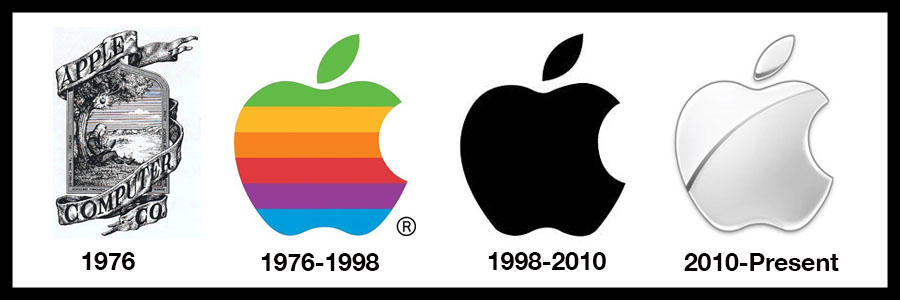
This is a brand:

What does this brand represent? Most people would say computers, iPhones, iPods: tech devices. But what would Apple say? How about this:


It is not about the devices themselves, it is about resisting drudgery, being empowered, becoming an individual. And not just any individual: 


Apple's products do more than simplify tasks, grant access to information, and connect you with others. Sure, these are the common benefits afforded by tech tools. A MacBook or iWatch, though? These provide access to an illustrious list of people who refused to follow the status quo. With Apple's products, we can all fulfill one of our deepest human urges: to give voice to our singular potential and idiosyncratic point of view:


These are all examples of incredibly powerful branding. Full disclosure: I have been an Apple user since I first used the IIe in high school. I like to think I am not as rabidly loyal as other Apple users. I have never queued up outside an Apple store for the latest iPhone. In fact, I use a Samsung. Still, I would be dishonest and deluded if I claimed not to be enchanted by these ads and this brand. 

But wait. There's more to this brand. For example, in the last few years, Apple has been at the center of a scandal regarding the working conditions of those building products like the iPhone. In short, workers have faced grueling factory conditions, long hours, and low pay. And just like that, the enchanting brand narrative becomes a whole lot more complex. Exactly what kind of company is Apple? I guess one that cares most about its profit margin. In other words, a typical company.

Now that I have most likely oversimplified a complex issue regarding corporate labor practices without even broaching my own complicity as a first world consumer, I'm going to switch the focus to social media, students, and language that has gained currency in education. 

Specifically, I want to address how the term "branding" has been embraced by many educators, as in "students need to think about their personal branding." To be sure, this terminology surfaces in conversations regarding digital citizenship, as in "students should be careful to cultivate their personal brand in a way that makes them appealing to colleges and employers." To cultivate a personal brand is to carefully tailor your appearance, so that your name and your being become synonymous with some defined qualities.

As I consider it further, I am not surprised that this metaphor has caught on. It is the language of capitalism. Since many of us grow up with the sense that capitalism is part of the natural order, it makes sense that its ideas would attach themselves to more than products in the marketplace. But capitalism is no more natural than any economic or political system. 

I know I have used this language. But I now realize that I have used it without considering the implications. No longer. 

Here are my concerns, in no particular order:
  1. The point of branding is to obscure the truth, at least some of the time. It is used to sell a version of a product or corporation that might not be completely honest. In fact, Apple illustrates this perfectly, as do many other brands, like McDonalds, Coca-Cola, etc. In short, branding attempts to insulate the company from taking responsibility for its actions. It is a form of distraction, not a statement of authenticity.

  2. The point of branding is to sell. Yes, we live in a capitalist society; however, as human beings I like to think we have a deeper purpose than selling and buying. When I talk to my students about branding, though, I cannot help but feel that I am reducing my students to consumers and marketers. 

  3. The point of branding is to focus unrelentingly on oneself and one's influence. Yes, students need to consider how they appear to others, whether online or off. But I am starting to wonder if the brand coaching students receive ultimately feeds another term I see more and more: digital narcissism. In his Ted talk, James Nachtwey powerfully states that "every story does not have to sell something. There's also a time to give." When we focus on personal branding, do we undermine discussions about qualities like generosity and kindness, which should be seen as ends in themselves, not as traits to nurture for some kind of payoff?

  4. The point of branding is to craft a message and then stick to it. But people are complex, certainly more complex than a product or company. I want my students to embrace the complexity of who they are, not shy away from parts of their beings that might compete with the message.

  5. The point of branding is to gain a competitive edge over competitors. Once again, I know we live in a capitalist society, but I resist using the language of the marketplace to define all aspects of our lives. Yes, I want my students to achieve success. Yes, parts of life require competition. But applying the language of competition to something like identity formation? It seems like a sure way to deny those parts of oneself that fit a prevailing narrative.

  6. To be branded is to be marked indelibly. See cows and horses for example.
With all of this said, I am not sure what term to use instead of "branding." As shorthand for crafting online identity, it is powerful. But there is no reason to believe that it is the only possible metaphor to use. For now, I will leave this as fodder for another post. Ideas?


Sunday, November 23, 2014

A Second Week of #Edjoy: Mindfulness

Last year, while reading an article in FastCompany, I came across these photographs by Andrew White:


I love this. Not only are they fun, but White's playful project points to something really serious: the need to be aware. According to White, "the whole series thrived on spontaneity." There was no forethought regarding specific scenes or objects that White intended to capture. Instead, "It was just a case of shooting whatever presented itself." Looking at the range of photographs, this becomes readily apparent.

So, what does this have to do with my two-week old #Edjoy experiment? Mindfulness.

This idea has been floating around in the back of my mind over the last 14 days; however, a brief exchange with Reagan Weeks (@Reagan31) in today's #sunchat clarified it. We were discussing the importance of gratitude, and I tweeted how easy it is to get caught up in what is not working. To get stuck in cycles of negativity. Resisting these ruts requires mindfulness: being aware of the moments that make teaching meaningful and exciting, especially those that are mundane and easily-overlooked.

As I look again at White's Legographer, I realize what an ingenious exercise in awareness he has established for himself. By changing perspective in this novel way, everyday locations become areas for potential discovery.

So it is with #Edjoy.


My colleagues certainly have posted about the dramatic, even epic moments from the last two weeks. However, most of the #Edjoy posts concern the easily overlooked instances. Seeing what people have shared makes me more mindful of my own day, confident that powerful testaments to the beauty of learning are all around me. I just need to open my eyes. And keep them open.

“You must habit yourself to the dazzle of the light and of every moment of your life” 
-Walt Whitman

Saturday, November 8, 2014

A Week of #EdJoy

At last week's #sunchat about having fun, I floated the idea of tweeting around the hashtag #edjoy. For the two weeks prior to the chat, I had discussed the need for and meaning of the hashtag with some very insightful people in my PLN. You can read an older blogpost about that here. While there seemed to be unanimous support for getting the hashtag circulating, I still wasn't sure if people would be drawn to it.

Fortunately, my uncertainty proved to be unfounded.

By mid-week, a number of people were using #edjoy to share the classroom experiences that make teaching so incredible and rewarding. Some tweets identified big collaborative moments between students, while others highlighted the smaller, quieter one-to-one experiences.


Regardless of the specific situation referred to in the tweet, one thing was clear: Learning can not happen without a genuine sense of trust and caring. While these feelings get established in a number of ways, foremost among them is the belief that learning becomes meaningful when it becomes deeply personal. And some laughter and fun helps.


On a personal level, this was one of those weeks: long hours, including a night of parent conferences; a lot of grading; and a number of "misses." You know what I am talking about. Those classes where nothing really goes wrong; however, something feels off. Like there's a lack of connection. In any case, I ended a couple of the days in a funk. My wife refers to this as "impending doom." Maybe that's taking it too far. Still, anybody who has spent time in the classroom should know what I mean: a nagging, indefinable suspicion that things could have been better.

But then, each day, as I scanned Twitter, I saw the moments of #edjoy. All I can say is, they truly helped. I look forward to more, and to hopefully getting more educators involved. A sincere thank you to all who contributed ideas this week. I know there are far more than I've included here.

I'll give the final word to one of my favorite tweeps:
My brain and heart got a jolt this week as well. I'm ready for more. How about you?

Thursday, September 4, 2014

How Do Students Learn To Be Online?

In my Media Collage class, I have started off by asking students to think about learning. While the class is concerned primarily with understanding how to use our devices and the internet to be confident, creative, generous participants in digital spaces, the early discussions about learning have not necessarily focused on the digital. For example, the first project I assigned challenged them to create a 5 image story in Haiku Deck that focuses on something meaningful they have learned to do. It appears that all of the stories revolve around the decidedly "non-digital": perfecting a tennis serve, playing guitar, riding a surfboard, knowing how to share.

Strings: A learning Story - Created with Haiku Deck, presentation software that inspires

Once the students have finished this project, I plan on extending this discussion about the Haiku Deck narrative. Specifically, I am interested in the "learning constellation" that helped make possible the meaningful activity they learned to do.  For example, after creating my Haiku Deck model, I did a Google Drawing of my "learning constellation":

So here's the question that I am sure my students are wondering: "why is MrG taking all this time to discuss learning, especially when it does not seem to have anything to do with digital technology? What class did I sign up for anyway?"

And here's my answer. 

I want to spend time thinking about something meaningful we each have learned to do as a springboard to consider how we learn to use our devices and be online. Looking back at my constellation, I see that I had some expert guidance, both in the form of friends who were willing to work with me and be role models with whom I could experiment, and professionals who released music that inspired me to pick up the instrument. Additionally, there are some things about my learning experience that I did not include on the constellation, like my passion and motivation to learn how to play, my agency in deciding I wanted to dedicate time to it, and my understanding that getting better requires mistakes. Lots of mistakes.

What it comes down to is my suspicion that our students' learning experiences regarding devices and the internet are woefully lacking. (As are most adults'.) Have they had mentors guiding them? Helping them build their online presence? Illustrating how to be curators of information? Providing opportunities to experiment as creators? Probably not. Instead, learning to navigate the digital world probably has occurred in fits and starts, with some help from peers, parents, teachers. But mostly with a whole lot of stumbling in the dark.

To consider what a true learning experience looks like, including the constellation that makes it possible, is to bring into sharper focus the haphazard way most of us, especially our kids, learn to be online. With this established, hopefully we will all be motivated to make our learning experiences with digital technology more deliberate and purposeful.


Monday, October 21, 2013

But Is It Really 'Resolved'?

This exchange makes me smile:

Maybe I'm just happy to see that Goodfellas is not a completely dead reference yet.  For sure it is teetering.  And when I mention particular names associated with the film, like Scorsese or DeNiro? Forget about it.  Nevertheless, if this 14 year old knows the movie, there must be others roaming my school's hallways who also know media created prior to 2010.

But there's more to it than just a mutual love for this 80's gangster story.

The screen capture above shows a brief conversation on Google Docs. Typically, I see Google's default "Marked as Resolved" accompanying my comments. In this case, however, the student decided to use my comment as a way to extend the conversation. See how Tommy ends his question with "one of those classic scenes?" That refers to a discussion he and I began in class. As we talked about visuals, we agreed that it would be wonderful if he could find an appropriate to clip to play. People familiar with the film understand what a challenge this can be.                                                                

So here's a pretty big benefit to having students use Google Docs: in this one brief reply, I see this student continuing to process what we had discussed earlier.  I do not mean to suggest that using Google singlehandedly makes kids more recursive thinkers.  That ability existed before Google. But this brief conversation makes Tommy's reflection visible.  If in the past I had to assume that kids internalized conversations I had with them about their writing, this exchange provides a small but telling insight into how Tommy processes and tinkers with ideas.
                                                                                                                   
I also think this reply tells me that Tommy is engaged in what he is doing.  He wants to find the perfect moment to highlight the film for his peers.  The assignment itself requires Tommy and his peers to select a piece of media they find worthwhile, but that is a "hidden gem" for their classmates.  Instead of choosing at random or going with the first clip he can find, Tommy has sifted through telling moments in the film and arrived at what he considers to be a classic scene (and he's right, of course).
                                                                                                                   
All of this leads me to wonder about "Mark as Resolved." On the surface, this phrase appears perfect: informative and succinct. In essence, it tells me, the commentator, that my suggestion or question or feedback has been acted upon. There has been "resolution".  However, after seeing this phrase standing by itself on doc after doc, my view has shifted. 

It is totally hollow.  It resolves nothing. It feels more like a statement of "dis"regard. The very choice of italics seem to add a layer of irony or sarcasm to the visualness of the phrase.  Actually, there is no indication that my thoughts even have been read.  A colleague of mine requires students to say something when they resolve her comments, even if that something is "thanks for the comments."  I like this and plan on adopting the practice.

But this leads me to a different, albeit related, topic--as we think about helping kids establish digital routines, what do they need to know to be productive collaborators? One answer: be appreciative, thoughtful and deliberate. The same qualities we want them to exhibit in their face-to-face relationships.  And this will be the topic of another blog post.

Thursday, September 12, 2013

A Rationale for Some Recent Work

I wrote the following to share with my students, but thought I would make it public. Thanks for reading.

Add caption
Understanding that many of you struggled with the New York Times article, “The Foul Reign of Emerson,” I thought it might be helpful for me to provide a rationale for why I assigned it.  As I said a number of times in class, the piece was challenging.  Benjamin Anastas wrote it with the Times readership in mind: a readership that is typically highly educated.  While you might not be a part of this target audience, I do believe that struggling and stretching can have positive outcomes in your ability to grasp difficult texts. Think of it this way, if you are an athlete you don’t want to practice and compete against others below your level.  To improve your skills, you need to be pushed by somebody at least at your level, if not beyond it.  I think the same holds true if you are a musician, painter, performer. Or reader.
Some of you might have felt the same frustration when you read Emerson’s “Self-Reliance.” Perhaps you found yourself wondering, “why would MrG put me through this?  Why do I need to know any of this anyway?”  That last question is a pretty common refrain regarding many things “learned” at school.  Why do I need to know this?

My answer: you don’t.
Being unfamiliar with Emerson, or Anastas’s criticism of him, will not relegate you to some kind of second class status or cost you a job.  But I think this is the wrong question to ask. When I learn something new, my question is, “how can this benefit me?”  And my answer to this question is that the more I learn, the more the world around me takes shape.
snehit
Here’s the way I see it: due to my lack of knowledge, the world around me is obscured.  It’s dark.  Kind of like the night on the cusp of dawn when the outlines of objects can start to be discerned.  As I learn from others, whether it is Emerson, Einstein, an artist or colleague, these outlines become more substantial.  Objects present themselves.  The darkness recedes a little more.
C. Johnson

But there’s this as well: as these things I read and watch and listen to enlighten my world, they also help me to understand how to articulate my own ideas.  In essence, they allow me to take part in creating the world that is slowly announcing itself from the shadows.  Kind of like Harold with his purple crayon.

This is why I want to keep learning, even when that learning requires struggle and frustration.

So my question for you is this: what do you find it important to learn, even if it includes struggle, and why?

Saturday, August 24, 2013

1:1: How To Use Our Time

Two things have been on my mind lately: how incorporating devices into my classroom will affect the the way that my students and I learn together; and how to navigate some of the pitfalls that inevitably come with this environment.  The former fills me with excitement and hope.  The latter makes me anxious and uncertain, especially as I think about my goal of going paperless.

Here's my concern: I plan on making a good deal of what we read available as Google Docs, like excerpts from Emerson's "Self-Reliance."  If we are going to talk about these in class and I want them to take some notes on what he says, their Chromebooks will have to be open.  Once those Chromebooks are open, however, the internet with its multitude of choices and distractions, is a click away.  Of course, I understand that distractions have always abounded, even when students sat with hard copies in front of them. Just because they have a book or packet on their desks did not guarantee their attention, let alone thinking.  But the access to the internet represents a different kind of temptation.

So what can I do?  Here's a few possibilities:

Talk honestly with the kids about an online routine centered on mindfulness and responsibility.
Absolutely I plan on doing this and on describing my own efforts at using digital tools in useful ways. I've reflected on my routine on a Google doc here, which I will share.  When I've talked to students about a establishing a routine, they have responded positively. Still, they tend to see the choice to pay attention or not, whether online or off, as a personal one the student makes, over which the teacher has little control. Typically they are quick to point out that the student must deal with the consequences of deciding to not pay attention.  But their is a resigned tone to these conversations regarding how much a teacher can affect students' choices.  So I think I will need a something more proactive on my part.
One option would be to only allow a certain number of computers to be open at a time.  I've used this to varying to degrees of success.  On the positive side, it does make them aware of how they use their devices and instills a sense of shared responsibility.  The drawback, however, is that a student might want to access an article to contribute to the conversation, but be unable to because of a glut of users. Perhaps a way around this would be to have a revolving supervisory position responsible for noting which students wish to use devices to access articles and notes and can keep track of people's time spent online.  This would not be an "enforcement" position because I would not want students to feel that they need to police their peers.  Instead, the role could function almost like front of the house staff at a restaurant, noting reservations and moving people along.  Another problem might be that the person in this role would not be able to pay as much attention to the discussion or could miss some important points because the micromanagement of the class would probably demand quite a bit of attention.  Allowing people to share notes or ideas at the end of class could also help allay some students fears that they might have missed something due to not taking notes.
Another idea relates to 20% time.  Like many other educators, I find these methods very attractive for bringing genuine, self-directed learning into the classroom.  Thinking about how to integrate it, I am reminded of Stefan Sagmeister's Ted talk, "The Power of Time Off."  In the midst of explaining why he closes his design firm and embraces semi-annual sabbaticals, Sagmeister showed this graphic:

His point is that by the time we are done learning and working, we have little time and energy left to pursue our passions.  Instead of this common way of breaking up the stages of one's life, he proposes that we take this approach:


Sagmeister argues that we should break up the chunk of time typically saved for the end of one's life and integrate it throughout our most productive years.  He believes that this keeps one enthusiastic, engaged, and creative.  

Taking this as a cue, I wonder how students would respond to knowing that in each class period they would have a certain amount of free time to play on the Chromebook.  And by free time, I mean free time. They could use it to check in with  friends, explore some personally relevant idea or question, hit a website or two that they like, maybe even play a quick game: it would be their time.  The hope is that if they know they will have time for themselves, this could sharpen their focus and motivation during the time that I want them engaged on the curriculum.  When I think about how I work, I know there are times when I need short mental respites in between more intensive rounds of reading, writing, and thinking.  So instead of leaving these breaks for the end of class, they can look forward to them periodically during class.

Quite possibly I am delusional to think that providing this independent time will dissuade them from surfing when they should be otherwise engaged.  Then again, a conversation regarding all of these possibilities is worth having with the students.  Perhaps they have some suggestions that I have not considered.  That would be the best potentiality, for it would give us all a stake in negotiating how to make the classroom function as the powerful learning space I hope it can be.

Sunday, August 4, 2013

Being Present: Tweeting the Talk

Recently I attended the Leyden 1:1 Symposium.  On two consecutive mornings I was fortunate enough to hear timely, thought-provoking keynotes: first by Chris Lehmann and then by George Couros. See:
That's right. During these engaging addresses, I was tweeting.  But not only that.  I was also recording ideas and questions in Evernote.  Is all of this really necessary?  Wouldn't it be better to have my device closed and give my uninterrupted attention to the person speaking?

These are questions that I must address because, as my school moves to a 1:1 environment with Chromebooks, the same behavior that I exhibited will be duplicated by my students. And I do not want to feel impulsive in my classroom management decisions, or like a hypocrite.

Some of my "Evernotes" while listening to Chris Lehmann 
I think explaining why Evernote is important is easier than defending my twitter use.  After all, with Evernote I was making sure to document ideas that I wanted to employ in my own classroom and questions I wanted to consider after the presentation.  Most teachers I know encourage and even require note-taking by students during presentations, whether by the teacher or peers.  I think this would fall under the category of "active listening."

So what about twitter?  I tweeted 9 times while listening to Lehmann, 4 of which were retweets. During George Couros's talk the following morning, I tweeted another 9 times, including 3 retweets. When wondering if this is necessary, I know there are people who would answer with an emphatic "No!"

I imagine one criticism running like this: chances are most of the people citing a particular twitter handle (@chrislehmann) and hashtag (#LHS1to1) at a specific time are doing so because they are all participating in a conference, presentation, or workshop together.  Since these people have their twitter streams open, they will be privy to a lot of the same tweets bouncing back and forth, like light off of a mirror.  So how does it benefit somebody in the audience to reread a dozen tweets restating what the speaker just said, only in a more concise (less powerful?) rendition?

Actually, I think there might be something to this.

As I tweeted and read tweets during the presentations, I was struck by the repetitive nature of many of the tweets.  It was also interesting to see the flurry of activity when Lehmann or Couros would say something perfectly packaged for twitter consumption.  Suddenly fingers all around me would be busy.

Perhaps it would be preferable to just listen.

What's more, some people might add, is that part of the reason one tweets is to see how others respond--to see how many times others will retweet and favorite one's work.  In this way, there is a kind of narcissism to tweeting in general, and during a talk in particular.  It's like a bunch of people continuously reminding other audience members that, "yes, this speaker is good, but I'm also here and I'm special, too."  Ok.  So maybe twitter skeptics wouldn't argue this.  (Although I think some would.) But, being relatively new to twitter, I know I have wondered if this drives my tweeting.

So as I offer some reasons for why I added twitter to my listening repertoire, let me start by owning that last reason.  There is a part of me that feels good about others embracing my thoughts about what we are hearing, just as I'm sure others feel good when they see me retweet and favorite their tweets.  Is this a bad thing?  To the degree that it does not become the sole reason for tweeting, I don't really think so.

But the important reasons that I tweet during a presentation, and would like to offer my students the opportunity, are as follows:
  1. Working the 140.  Wow it can be exacting, especially when I know I need to save 8-15 of those characters for a handle and hashtag.  But I find the discipline required an invigorating challenge. As teachers, we are all concerned with our students' ability to be concise and clear.  Twitter communication demands these qualities.

  2. Making it stick.  As a teacher, I know that one surefire way to understand something is to teach it. No other activity insures that one gets to know a subject inside and out.  While tweeting what somebody else stated is not exactly like teaching it, there is value, nevertheless, in crafting a tweet that captures and articulates an idea.  In those moments when shaping a tweet, I find myself thinking more deeply about the idea and the perfect wording.  Contrary to the criticisms that tweeting reinforces superficiality, it provides me with spurts of hyper-attention and mindfulness, even if these can be brief, which, hopefully, help in the process of moving the information beyond the short-term memory.  And even if the idea does not make it into more stable memory, it has been recorded and can be revisited.

  3. Joining the conversation.  Yes, that phrase is probably cliche by now.  Yet, widespread use does not make it untrue.  In the midst of tweeting about Lehmann and Couros's keynotes, I had individuals agreeing with my tweets, refining my tweets, and raising questions and sharing links based on my tweets.  As I stated in #2, tweeting is not mired in superficiality.  But neither does it encourage passivity.  As with Evernote, tweeting requires me to be actively engaged and evaluating what I'm hearing.  Unlike Evernote, however, tweeting also allows good ideas to spread because

  4. Tweeting is sharing.  In the hypothetical counter-argument above, I imagined that a talk's physical audience also represented the majority of the people reading the tweets about the talk. Maybe. However, I know from experience that people absent from the Leyden Symposium commented on and retweeted my tweets.  These fellow educators deserve to hear what leaders in the field have to say.  It reminds me of this tweet, from an educator I connected with at the Leyden Symposium
Given these reasons for why I tweet during presentations, I cannot fathom withholding the experience from my students.  Even if it means there will be times when I or somebody else is speaking, and the class looks like this: