All people want to dig into ideas and discover what life has to offer.
All people want to experiment with materials and visions of what can be.
All people want to play.
This is not a school thing. This is a human thing.
But what happens in school? As kids get older, this kind of exploration gets less relevant, because it gets less emphasized. Play disappears. The goal of learning shifts from doing, experiencing, and being active to watching, recalling, and being passive. A disconnect develops between being a learner and being a student, as if the former has nothing to do with the latter. It seems like schools stop viewing kids as people with natural curiosity, maybe even to the point that students stop trusting their own curiosity. The idea of play, so important for kids, is no longer considered to be a critical feature of the learning process.
Growth measured with tests, understanding quantified with a number, success and failure determined by a letter: these are the conventional ways to define learning. Ultimately, this status quo undermines the messy, exciting, intrinsically rewarding process of learning. After all, it's no longer about process; it's about the tests, the points, the grades. It ultimately makes me wonder:
Educators, parents, students: we all have a stake in considering this question.
I have always been fascinated by artists. They start with a blank page, a blank canvas, a collection of chords. Then, through sweat, determination, and vision, something incredible happens. Worlds are born, songs are crafted, paintings are created. Since high school, I wanted a part in this. But how? As a 36 year old, I decided one possible avenue. With the help of some talented friends, I picked up the guitar and have been playing it ever since.
My plan now? To keep learning, to keep playing. Maybe write some songs, even if they are just for me.
Over the years, I have enjoyed acquiring a range of hobbies and interests: I like to cook; I like to play guitar; I like to make some art; I like to do yoga; I like to paddleboard. While I take these activities seriously, I have not done any of them enough to be an expert. I am not a chef. I am not a musician. I am not an artist.
So, is there anything that I do about which I feel like an expert? Probably not. But maybe I come closest when I consider my experience as a teacher and a learner.
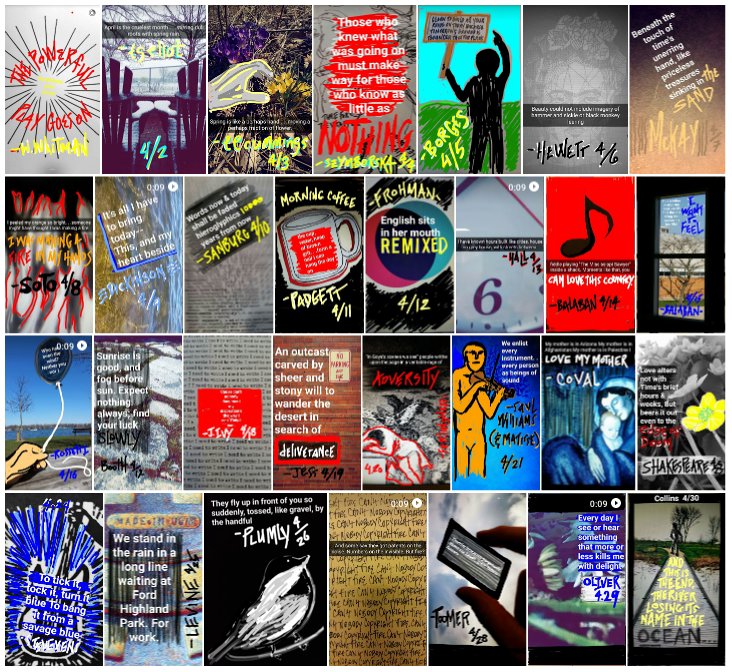
For the second year in a row, I undertook an art challenge for the month of April. In case you were unaware, April is #NationalPoetryMonth. Perhaps you are thinking, “that sounds like a month designed for and observed by English/Language Arts teachers.” I’m pretty certain that is what some of my students were thinking.
Although this post is not meant to be a defense of poetry, I will say this: good poetry amazes me. It stuns me. It wakes me. Like a perfectly executed 3 chord riff, a poem relies on so little — a sharply worded observation and an attention to language that can otherwise seem so commonplace. And it relies on so much — the desire by poets to take an active interest in our world and share what they see, what they think they know, and what they know they don’t know, with the rest of us. Like any other art, when a poet makes it click. . .magic.
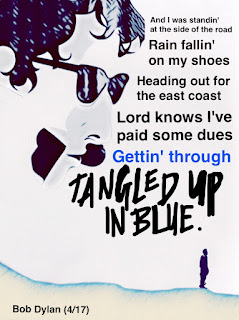
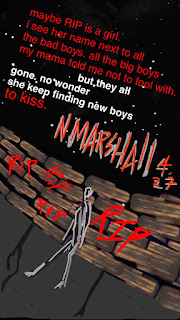
Back to my self-imposed challenge. I decided that for each day of April I would use Snapchat to illustrate a bit of a poem. And that’s about it. While I allowed myself to import images from my camera roll, I decided I would only use the editing tools available within the app: filters, cut-outs, drawing, and text. No outside photo editors. I think I stuck to it. The only other major requirement was to post by midnight. I think the closest I got was 11ish, which was close enough to make me worry. I also knew I had to make room on each post for the poet’s name and date. I know I forgot that last one a few times.
Pretty quickly I discovered a few of things:
1. Restrictions are useful. I guess this was less of a discovery than a reminder. I remember watching The Five Obstructions some years back. Lars Von Trier challenges Jorgen Leth to remake one of Leth’s film. Each time, Von Trier gives him obstructions to the creative process. The problem-solving Leth employs is pretty spectacular. It was probably the first time I understood how limits can bolster creative thinking. I am also a big fan of On Kawara's Today Series, in which the Japanese conceptual artist attempted to paint each day's date every day. He painted each canvas according to some pretty strict guidelines for size, color, and lettering. Furthermore, if he failed to finish a canvas by midnight, he threw out it away. When I have watched and read about both of these art experiments, I have tried to imagine how it would feel to create under such a regimen. While my project is small by comparison, it still gave me insight into how and why an artist would choose to limit their options.
2. Setting out to make something everyday greatly impacts your schedule. This must seem obvious, but it was powerful nevertheless. Since each one could take me anywhere from 45 minutes — 2 hours, I found myself looking at downtime quite differently. A free fifteen minutes before a class? Work on my #poemsnap for that day. Ten minutes of waiting for my daughter’s track practice to end? Work on my #poemsnap for that day. My wife needs five minutes before we watch The Americans? #Poemsnap time.
Recently I have heard interviews and read articles that make a case for boredom. At issue is the way so many of us use our devices to fill in moments of boredom with distraction. According to these interviews and articles, when we give in to the distractions offered by our devices, we are robbing ourselves of time to be bored, which is time to crank up the imagination. This might have particularly insidious effects for younger people. My project gave me something to do in these moments: I was either working on the snap or reading poetry and finding voices that were new to me. It kept me invigorated and distractions became unnecessary. It focused my attention.
3. It is exciting to get it right. And scary. It was so satisfying to (almost) perfectly execute an illustration that captures a mood, an idea, a feeling of some lines of poetry. But it was also daunting because as soon as I posted the snap, I immediately started to think about the next day: the poem, the imagery, the shape of the text. Recently, I watched an episode of the documentary series, Abstract, that focused on the graphic artist Christoph Niemann. In it, he talks about the anxiety caused by success: can it be followed? Will there be another idea? Will he reveal himself to be a fraud? Niemann calls these "lucky moments" when he has "won the lottery." Of course, I am not comparing my #snapchatart to Niemann’s deadlines for New Yorker covers. But I grasped his point. As the month progressed, I was aware of not wanting to copy myself, of not replaying the same moves. It was rough.
I drew these hands on my iPhone screen!
If there is one other thing I loved about the project, it was spending so much time being intentional. I think this could be one of the greatest benefits of creative work. If I make thousands of decisions a day, which research suggests, most of them are done without much thought. Perhaps whole days go by without some overarching theme or reason. Or intention. But throughout April, I had a reason for each day. And when I was creating each snap, I was living intentionally. Decision upon decision. Execute. Assess. Perhaps redo. And then make more conscious decisions.
The scale of the work might be small, but the consequences, as it turns out, are massive.
I'm not a huge fan of the word "inspiration." Unfortunately, I feel like it has been co-opted by kitty poster market and self-help movement. When I hear the word "inspiring," I can't help but imagine
Still, I know that I do get inspired by ideas. I get inspired by artists. I get inspired by words and music and creators of all kinds.
For instance, when Walt Whitman says, "habit yourself to the dazzle of the light and every moment of your life," I feel that push to engage with my world. He inspires me to be active instead of passive. He inspires me to be interested in where I am right now. So here's to Whitman:
Henry David Thoreau also had an unrelenting desire to know the world firsthand. He neither tolerated nor excused passivity. And he did not concern himself with what others thought of his lifestyle. People criticized him for choosing to live at Walden; however, it made no difference to him. Instead, he faced life with the determination to "drive [it] into a corner." When I read this, I think, "how about me? Do I live vibrantly? Do I live vigorously?" So here's to Thoreau:
Both motivate me to observe, think, and create, even if that creating stays private. After all, it's not about changing the world. It's about changing myself. I guess I can be inspired. I know I should remember this:
Here is something I have been chewing on for a few days:
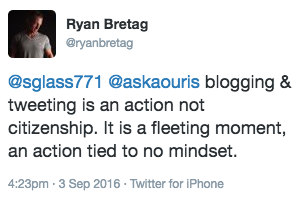
Ryan tweeted this after I tagged him in a tweet of my own:
So, yes, I instigated the debate that ensued. And it was lively. Ryan, a colleague, questioned the necessity for an online presence and balked at reducing citizenship to a discussion of devices and online activity. I agree. I am weary of the calls for "digital citizenship" training in schools because these calls usually have a limited focus: how to be safe, how to maintain privacy, how to cultivate your brand. I find that last one particularly irksome. I'm a person, not a brand.
But I keep coming back to that tweet, particularly the statement that "blogging. . . is a fleeting moment, an action tied to no mindset." Really? As I sit here (paused, fingers over the keys, trying to decide my next move), I disagree completely with the assumption that what I am doing is not indicative of a mindset.
Here is a simple definition:
What, then, is the mindset that blogging affords? Or, what are the attitudes I hold due to blogging?
As I try to answer those questions, let me start by thinking about the writing mindset more generally:
Writing is thinking. It is a kind of mindfulness in that I use it to slow down; to investigate an idea or question more deeply; to take a measurement of my mind. Sure, I think while not writing. But when I want to scan my world more widely and/or deeply, I need to dedicate myself to my thoughts in a way that only writing provides.
Writing is creating. Lately, in education, it feels like STEM (and STEAM) own the words "creating" and "making." If students are not rigging something out of legos, cardboard, and circuits in a maker-space, they must be languishing in classes that deprive them of meaningful opportunities to pursue their curiosity. Wrong. Writing is all about pursuing curiosity and then using the most amazing technology humans have devised in order to express themselves: our language.
Perhaps some of the fault resides with us, the language arts teachers. Maybe we focus too much on teaching students how to fill out forms in the guise of 5-paragraph essays. We should never cease to be amazed by our ability to write clearly, confidently, and engagingly. We should stand in awe at our ability to calm and organize the jumbled and undisciplined cracks of insight in our minds so that, to paraphrase Ralph Waldo Emerson, the innermost can become the outermost. Writing makes this possible.
Writing is craft. Like any creative pursuit, it requires attention to detail and intentionality. When attempting to convey myself thoughtfully and interestingly and clearly, choices seem to be endless. Actually, I'll let the great writer, Tim O'Brien, explain this one:
There are twenty-six letters in our alphabet. And there are some punctuation marks, and that’s it. All we’ve got. Nothing else. And out of those 26 letters you can make Ulysses, or the Iliad, in translation – or . . .some piece of junk. The same twenty-six letters! And it’s the responsibility of the writer to pay attention to those letters, putting them in order so that they’re graceful, lucid, clear, all the things that matter to you as a writer.
But what about blogging, in particular. So far, the mindset I have described does not require an online presence. So what mindset does blogging prompt and perpetuate? Here are three attitudes:
I can join the conversation. A grad school professor I had stated this once, and it has stuck with me. His point? For virtually anything we are interested in there exists online a robust conversation. The first job of the writer is to familiarize herself with this conversation. The second is to join. Blogging (and technology) has made joining possible for a much wider range of voices than ever before. Of course, joining does not insure an audience. But I know from experience that crafting a blog post makes me consider the potential audience or community, and this has serious implications for the way I present myself.
I can be generous and empathetic. This goes for me as a blogger, but also as a reader of other people's blogs. I have written blogs in which I highlight other people's ideas and give credit to people for pushing my own thinking. This includes linking to their work as a way to give them more audience. I have also commented and tweeted my gratitude to writers whose work I value. While these actions might not seem like much, I know they matter, both for the individual as well as for a broader community that these actions can help to establish. Similar to joining the conversation, being generous and empathetic are vital to a participatory culture in which people feel comfortable sharing, agreeing, and disagreeing. This is a mindset I mean to practice daily in my digital routine and in my blogging.
I can be an active producer instead of a passive consumer.
Yes, I do believe that writing is a mindset. And blogging, too.
April is National Poetry Month. This year, I decided to celebrate it by giving myself a challenge: create one original piece of Shapchat art each day that would combine some kind of visual with a line from a poem.
Going into the project, my main goal was to learn Snapchat. As a parent and teacher, I have seen it become the preferred social media platform for young people, so I wanted to get a sense of it. What I discovered, though, went beyond how to use the app. Here are 3 of the more important things I realized.
I like poetry.
Sounds funny coming from an English teacher, but I don’t spend a lot of time with poetry in my classes. Typically, I’ll throw 3-4 poems at my students over the course of a year. And these end up being my go-tos. Since this project required me to find 30 lines of poetry, I had to range far beyond the old standbys. This searching and reading reminded me of how powerfully poets combine language and brevity in order to convey their thoughts about the deepest, most complex questions confronting human beings.
Tim O’Brien, my favorite writer, says that all we have is 26 letters and a few punctuation marks through which we try to make ourselves understood to others. Poets are in the business of using these letters and punctuation marks to make concise observations about our world. Gabriel Orozco, one of my favorite artists, says that he wants to be intimate with the world, and art is the attempt to build bridges so others can also experience that intimacy. Poets use a slender toolbox indeed in order to build their bridges.
I like to use my technology for a purpose.
Here I am thinking about the way so many of us fall into the scroller trap. Think about how often you or people you know fill downtime with tech time. For years, I resisted getting a phone. Now that I have one, I find myself reaching for it when I have a few minutes with nothing to do. Like when I am picking up my kids from soccer practice, am in a waiting room, am on a train. More often than not, I am looking for nothing in particular. It is mindless scrolling. I have tried to be more aware of this tendency and to resist it.
My poetry project gave me a goal or destination for these moments. Throughout April, when I found myself reaching for my phone to fill in some seemingly empty moments, I went to poets.org or the poetry foundation and read poems. I was always on the lookout for the poems and even specific lines that made me say, “whoa! yes!” For the lines that gave me that chill factor. Instead of tuning out during the downtime, this searching kept me thinking. Interestingly, I found myself putting away the phone after a particularly compelling poem in order to think about what I just read and how I might use it in my project. As an educator, I have participated in numerous conversations about helping kids to become thoughtful, critical, and creative citizens, online and off. This project helped me to achieve these goals.
Speaking of creativity. I like to create (and to give myself creative challenges).
A few years back, I read a book by David Gauntlett called Making is Connecting. It is wonderful and I highly recommend it. In his writing, Gauntlett offers his definition for everyday, personal creativity. For Gauntlett, this kind of creativity is typified by making something novel for oneself. Too often, he found that definitions of creativity were written with society in mind. For something to be considered creative, it needed to be judged and accepted by a community of experts. Like Gauntlett, this view of creativity ignores the creative urge we all feel. When I made the Snapchat images, I was primarily concerned with making something pleasing to me. I knew others would see my creations. That is the point of social media. However, my main concern was with my experience. How did I feel while in the process? What kinds of decisions did I need to make as I created? How well did I execute those decisions? What did I think about the finished work?
Taken together, these questions and this thought process gave me a sense of autonomy, a sense of agency, and a deep sense of satisfaction. Consider how many decisions we make everyday, and, of those decisions, how many are done without thinking. This kind of creative project provided me with thoughtful decisions. Color choices, layouts, text position: for such small works, the choices could be almost overwhelming. But these choices required intentionality, and I liked that feeling.
Ultimately, the project led me to this: Yes, I could be a creator, not a consumer. I could bring something new into the world, even if on a small scale. I could translate an idea into a tangible work. I feel accomplishment, even when I struggled. Or especially when I did. Well worth the investment.
The Hollywood producer, Brian Grazer, is known for his blockbuster movies, like Apollo 13, his blockbuster hair, and, more recently, his habit of having "curiosity conversations." While it is unlikely that I will duplicate either of the first two accomplishments, as soon as I heard about the last one, I knew that I had to try it.
As a teacher, it is critical that I remain a learner. After all, how can I ask my students to challenge themselves in new ways if I am unwilling to do the same. In the last year, my desire to learn, to be a student, has led me to woodblock printing and Kurt Webb.
Kurt teaches Ceramics and art at my school, Glenbrook South. While I have known Kurt since I started at GBS 19 years ago, it is through his generous mentorship in printing that I have acquired a deeper appreciation for who he is as a teacher, artist, and colleague. Our carving and printing sessions typically turn into rich discussions on creativity, education, and culture in general. He seemed perfect for my first attempt at a curiosity conversation. And he did not disappoint.
As you listen, you will see my comments. These are questions I found myself asking. I think any one of these questions could make for an interesting, thought-provoking bit of research. If you have a question of your own or a response to one of mine, feel free to leave it on the Soundcloud track or as a comment to this blog.
Hurricane Katrina devastated the Gulf Coast. Among the hardest hit areas is New Orleans's 9th Ward. Since 2005, local, state, and federal funds have been used to re-establish the institutions that are necessary for a community's survival: housing, schools, health services, etc. While these are all necessities, there is one more requirement for a robust community: a sense of shared experience among its people. It's easy to overlook this last necessity in the midst of the tangible rebuilding efforts. But this intangible is crucial. With a sense of shared experience, people are more willing to support one another, be empathetic towards what others are enduring, and work together. So how do communities nurture these connections? One way, according to Candy Chang, is through art.
Although her project, "Before I Die, I Want To," is not targeted specifically at communities most affected by the Hurricane, it did turn an abandoned space in her New Orleans neighborhood into a giant chalkboard on which she asked people from her community to share with each other their hopes, goals, and dreams in a very public way. As she says in her inspiring Ted Talk, "[A community chalkboard is] about knowing you're not alone. It's about understanding our neighbors in new and enlightening ways." As she shows pictures of the statements people left, she expresses her incredulity at the project's popularity. Not only did her neighbors flock to the wall to share their profound and humorous thoughts, complex and simple goals, but people from across the country and around the world began to do the same in their own communities.
Lately, I've been wondering about the degree to which art can help affect social change. This short, spirited talk by Chang provides me with an uplifting answer: art can do much to rectify issues within our communities. With this idea in mind, I have curated a number of artists who provide examples of using art to affect change on large and small scales.
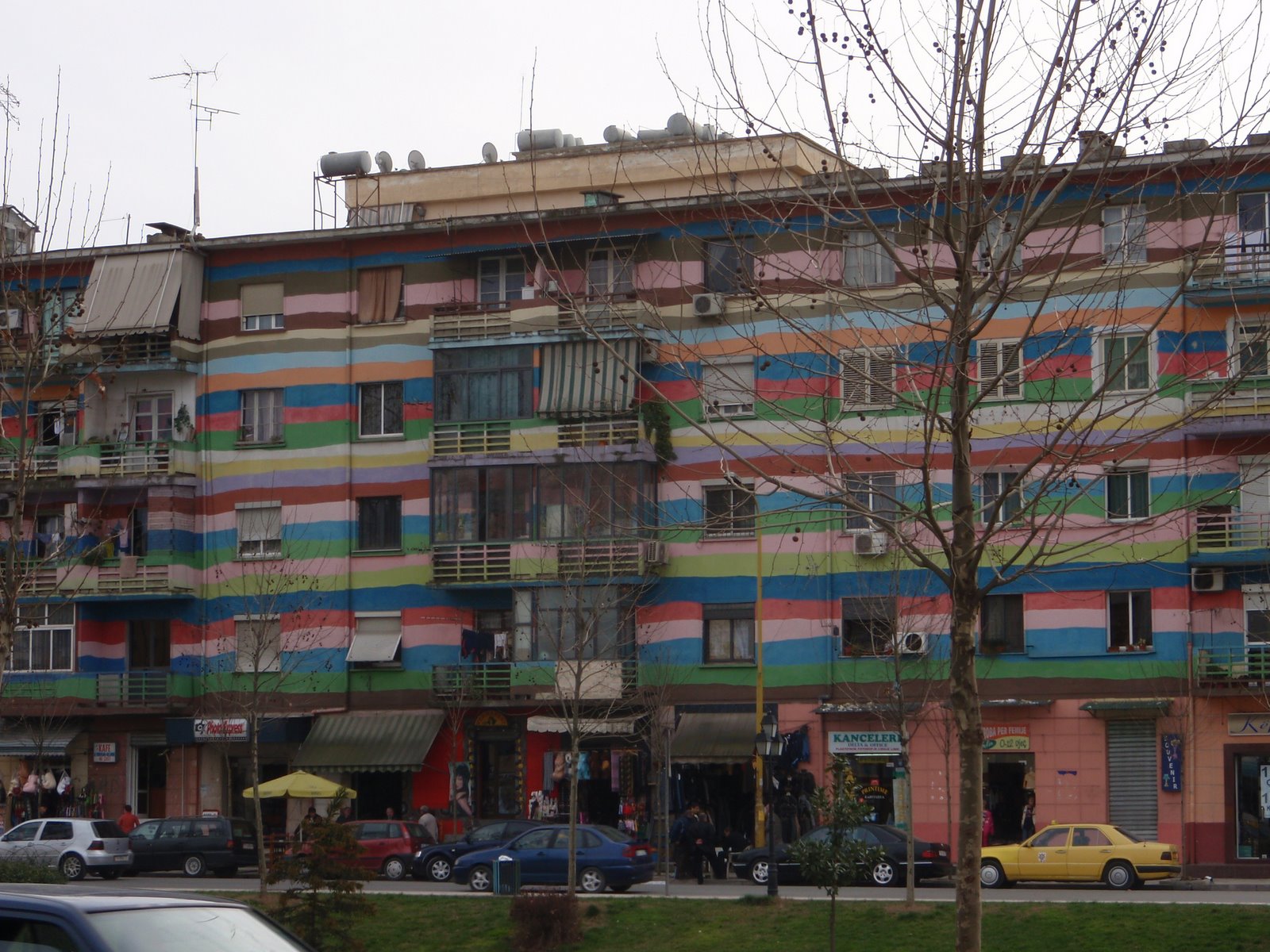
Edi Rama has affected change on a large scale. The mayor of Tirana, Albania, Rama, like Chang, employed the vocabulary of art to convince his constituents to take ownership of their city. Instead of using text, however, Rama used color itself.
In his Ted Talk, "Take Back your City With Paint," Rama describes the immediate effect that painting buildings had on the citizens of Tirana: "When we painted the first building. . something unimaginable happened. There was a traffic jam and a crowd of people gathered as if it were the location of some spectacular accident, or the sudden sighting of a visiting pop star."
Of course, this is an art project on a grand scale. Grander, even, than Chang's. In order to succeed with his project, Rama used the political leverage at his disposal. So what happens if an individual does not have this kind of political muscle? Or even the wherewithal that Chang shows in taking over an abandoned building? Perhaps that is where an individual can participate in projects made possible by social media, like JR's "Inside Out" campaign.
I have always been fascinated by artists. They start with a blank page, a blank canvas, a collection of chords. Then, through sweat, determination, and vision, something incredible happens. Worlds are born, songs are crafted, paintings are created. Since high school, I wanted a part in this. But how? As a 36 year old, I decided one possible avenue. With the help of some talented friends, I picked up the guitar and have been playing it ever since.
My plan for the future: to write songs, even if just for myself.
I have shown the PBS documentary Between The Folds to students a number of times. While I find the whole exploration into paper folding engaging, my favorite moment occurs when origamist Paul Jackson shows his folding technique. Why does this moment stand out? It's all about the hands.
When I see his fingers, I know I am looking at a creator. I am looking at experimentation, knowledge, curiosity, and passion. Those smudges of green, yellow, and blue confirm Jackson's desire to be active and engaged with materials, with the world. Those are not the hands of a passive consumer.
Speaking of process, Jackson explains that "making [something] is the point of it." I could not agree more. In my own experience, creating, even if just for myself, provides an experience that is hard to replicate elsewhere. Whether it is messing around on guitar, figuring out how to carve and print a woodblock, exploring ways to use digital tools to make personally meaningful media, or even crafting a blog post, these activities give me deeper access to my thoughts. A quiet, singular focus replaces the noise that daily competes for my attention. What I hear instead is my own breath and its rhythm, sometimes held at a key moment. Now exhaled.
This physical nature of work can not be overlooked: the senses, the heartbeat, the feel of my fingertips on the materials, whether an exacto knife or keyboard. Together these make the aesthetic experience unordinary. At another point in the documentary, folder Chris Palmer demonstrates a lengthy process of creating a flower/tower. I see how intent he is. But I also hear it--his breath mixing with the sound of the paper being manipulated.
After spending four hours on his work, Palmer says that "the process is 2/3rds of what's special about something that got made." I think I saw this documentary for the first time almost 10 years ago. Since then, I have worked to become a creator. Now I better understand why Palmer and Jackson celebrated the process itself.
And now I wonder if this could be the most important lesson for students in my classroom.
Ask people to define the purpose of school and most will answer, “to learn.” However, school is not the only place where we learn. As human beings, our lives are consumed with learning, from the time we are born to the end of our lives. Unfortunately, however, many students associate school with a certain kind of learning process. This process can best be described as top-down: content is selected by others, pacing is dictated by others, and the form of assessment, usually tests, is decided by others. In short, every step of the process originates from outside of the learner, who is motivated to succeed extrinsically: follow the directions, master the material, get an “A.” If not, face punishment. As a consequence, many students lose their drive to learn, at least at school.
So here is a question: How can schools make the learning process more personalized and meaningful for all students? One intriguing answer: by adapting 20% time.
20% time is a concept made famous by Google, but its roots reach back to the mid-20th century, when the head of corporate giant 3M decided to give its employees 15% of their time to work on projects they found personally relevant, whether or not those projects related to their specific position. 3M’s reason for such a radical shift was simple: giving workers the autonomy to determine what is meaningful to learn fosters more engaging, motivated, productive and happy employees. Of course, these are the same reasons why Sergey Brin and Larry Page instigated the policy at Google 60 years later. And other companies have begun to pick up on it as well. Now it is education’s turn to explore the benefits of 20% time. Certainly the goal is to reignite student passion for learning and reacquaint them with the joy it brings. But that is not all. Technology and the easy access to information has disrupted all aspects of our lives, including the way we learn and work. Our kids must be self-starting, creative, perseverant thinkers. These traits cannot be nurtured in an environment that deprives them of choice and agency. The classroom must become more flexible with teachers acting as facilitators and guides, not as the repositories of all knowledge. This is what a colleague and I hope to accomplish as we set out on our 20% time experiment. Specifically, our students will articulate a question of interest, research the question, and then determine what they can make and do with their discoveries. Along the way, they will be sharing what they learn and create with their peers and others. By the way, one result of 3M’s experiment with 20% time? The post-it note. For Google: gmail. Two wildly successful products born out of the willingness to give people control over what comes so natural: learning.
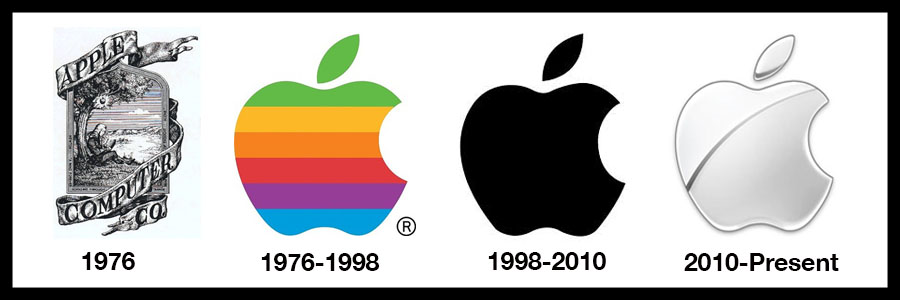
What does this brand represent? Most people would say computers, iPhones, iPods: tech devices. But what would Apple say? How about this:
It is not about the devices themselves, it is about resisting drudgery, being empowered, becoming an individual. And not just any individual:
Apple's products do more than simplify tasks, grant access to information, and connect you with others. Sure, these are the common benefits afforded by tech tools. A MacBook or iWatch, though? These provide access to an illustrious list of people who refused to follow the status quo. With Apple's products, we can all fulfill one of our deepest human urges: to give voice to our singular potential and idiosyncratic point of view:
These are all examples of incredibly powerful branding. Full disclosure: I have been an Apple user since I first used the IIe in high school. I like to think I am not as rabidly loyal as other Apple users. I have never queued up outside an Apple store for the latest iPhone. In fact, I use a Samsung. Still, I would be dishonest and deluded if I claimed not to be enchanted by these ads and this brand.
But wait. There's more to this brand. For example, in the last few years, Apple has been at the center of a scandal regarding the working conditions of those building products like the iPhone. In short, workers have faced grueling factory conditions, long hours, and low pay. And just like that, the enchanting brand narrative becomes a whole lot more complex. Exactly what kind of company is Apple? I guess one that cares most about its profit margin. In other words, a typical company.
Now that I have most likely oversimplified a complex issue regarding corporate labor practices without even broaching my own complicity as a first world consumer, I'm going to switch the focus to social media, students, and language that has gained currency in education.
Specifically, I want to address how the term "branding" has been embraced by many educators, as in "students need to think about their personal branding." To be sure, this terminology surfaces in conversations regarding digital citizenship, as in "students should be careful to cultivate their personal brand in a way that makes them appealing to colleges and employers." To cultivate a personal brand is to carefully tailor your appearance, so that your name and your being become synonymous with some defined qualities.
As I consider it further, I am not surprised that this metaphor has caught on. It is the language of capitalism. Since many of us grow up with the sense that capitalism is part of the natural order, it makes sense that its ideas would attach themselves to more than products in the marketplace. But capitalism is no more natural than any economic or political system.
I know I have used this language. But I now realize that I have used it without considering the implications. No longer.
Here are my concerns, in no particular order:
The point of branding is to obscure the truth, at least some of the time. It is used to sell a version of a product or corporation that might not be completely honest. In fact, Apple illustrates this perfectly, as do many other brands, like McDonalds, Coca-Cola, etc. In short, branding attempts to insulate the company from taking responsibility for its actions. It is a form of distraction, not a statement of authenticity.
The point of branding is to sell. Yes, we live in a capitalist society; however, as human beings I like to think we have a deeper purpose than selling and buying. When I talk to my students about branding, though, I cannot help but feel that I am reducing my students to consumers and marketers.
The point of branding is to focus unrelentingly on oneself and one's influence. Yes, students need to consider how they appear to others, whether online or off. But I am starting to wonder if the brand coaching students receive ultimately feeds another term I see more and more: digital narcissism. In his Ted talk, James Nachtwey powerfully states that "every story does not have to sell something. There's also a time to give." When we focus on personal branding, do we undermine discussions about qualities like generosity and kindness, which should be seen as ends in themselves, not as traits to nurture for some kind of payoff?
The point of branding is to craft a message and then stick to it. But people are complex, certainly more complex than a product or company. I want my students to embrace the complexity of who they are, not shy away from parts of their beings that might compete with the message.
The point of branding is to gain a competitive edge over competitors. Once again, I know we live in a capitalist society, but I resist using the language of the marketplace to define all aspects of our lives. Yes, I want my students to achieve success. Yes, parts of life require competition. But applying the language of competition to something like identity formation? It seems like a sure way to deny those parts of oneself that fit a prevailing narrative.
To be branded is to be marked indelibly. See cows and horses for example.
With all of this said, I am not sure what term to use instead of "branding." As shorthand for crafting online identity, it is powerful. But there is no reason to believe that it is the only possible metaphor to use. For now, I will leave this as fodder for another post. Ideas?
There's something special about playing guitar. Maybe it's the populist nature of the instrument: learn a few chords, a few patterns, and you're ready to go. Put it over your shoulder and you're ready to go: the porch, the campground, a friend's house. It is made to travel.
Woody Guthrie
When accompanying a voice, the guitar adds depth. It adds texture. It adds backbone to the experience being communicated. In the right hands, the guitar builds worlds. It's like a hammer, a wrench, a screwdriver: a tool so essential and simple, but also so damned vital.
Picking up the guitar fosters creativity. So many songs have been written. However, like the variations inherent in every chess match, the unique combinations of notes and chords are practically unlimited. And, as I've learned from experience, you're never too old to start. It's about dedication and the desire to have a space to create, both of which I value having in my life. Even if I can't sing. Yet.
At the beginning of the school year, I made some goals. One was to "be an advocate for connected learning." Recently, I did an experiment with my students towards this end: I asked them to participate in a Twitter chat using #noquogbs.
My rationale: Let students hear from a broader range of their peers. This includes not only the typically silent voices in a particular class, but students in the other classes, as well. I teach three sections of Humanities, so I thought they could respond across classes. And maybe even to others not in Humanities. Or, at least this was my hope.
Let students control the direction of the conversation. I gave them the broad topic: status quo thinking. But, because this is such an expansive subject, they had an opportunity to use this as a springboard to move in any direction they chose. Unlike in class, where a small group of students intent on probing a specific thread might dictate the direction of a conversation, on Twitter, each student could choose to build off of what somebody else said or introduce a new area to consider. Or, at least this was my hope.
Let students use time to their advantage. This seems like a big advantage. Typical conversations are limited to the times that classes meet. If a student is absent during that time, oh well. If a student is feeling tired, unmotivated, stressed during that time, oh well. Classroom discussions demand performance regardless of extenuating circumstances. Because this was an asynchronous chat, students could join in when ready. Or, at least this was my hope.
Let students experiment with using social media for an academic purpose. This is a biggie. I implore them constantly to think about how social media platforms can and should be used to establish an academic and even professional persona. But I had done little to help them move in this direction. This chat could be an initial way to experiment with this possibility. Or, at least this was my hope.
Finally, I wanted them to enjoy connecting with each other in a different way. While many of them tried to fashion 140 character tweets that sounded similar to the voice they use in class, I did see some informality sneak in. Of course, we all know that speaking with an authentic voice is critical for feeling connected to an idea. Similarly, the ability to shape the way language gets used builds a sense of agency. To this end, I thought Twitter would allow students inventive ways to respond with energy, humor, and personality. This way my hope. With the tweets written, I asked students to turn their attention to their blogs and write in more depth about a question, issue, or idea regarding status quo thinking--the topic of the chat and the 3rd quarter material. This step cannot be deemphasized. By moving from micro-blogging to a long form response, students hopefully experience for themselves the benefits and uses of both. I have read the criticism of social media platforms like Twitter: they erode attention and reward shallow thinking; in a culture lacking deliberation and thoughtfulness, Twitter exemplifies the desire for narcissism, summary and speed. Sure. This happens. But is it the fault of the tool? Or is the real issue that we have a penchant for embracing technology without taking time to see its possibilities and pitfalls, without learning how to use it in refined, powerful ways? I am going with the latter. In any case, as a teacher, I must do what I can to help my students become confident, creative thinkers. This includes helping them navigate their culture and know how to best leverage the tools available to them. Within this context, understanding how to use social media for professional and academic purposes becomes central, not superfluous. As you can see, I had a lot of hopes going into this experiment. Of course, I am not about to argue that all were achieved. But when is that ever the case? To be sure, it proved successful (and popular) enough to try again, which I will do. The risk was well worth it. Besides, if our technological and cultural status quo favors superficiality, small bites, and inattention, then sign me up as a disruptor. I, with my students, will do what I can. And learn something along the way.
I love this. Not only are they fun, but White's playful project points to something really serious: the need to be aware. According to White, "the whole series thrived on spontaneity." There was no forethought regarding specific scenes or objects that White intended to capture. Instead, "It was just a case of shooting whatever presented itself." Looking at the range of photographs, this becomes readily apparent.
So, what does this have to do with my two-week old #Edjoy experiment? Mindfulness.
This idea has been floating around in the back of my mind over the last 14 days; however, a brief exchange with Reagan Weeks (@Reagan31) in today's #sunchat clarified it. We were discussing the importance of gratitude, and I tweeted how easy it is to get caught up in what is not working. To get stuck in cycles of negativity. Resisting these ruts requires mindfulness: being aware of the moments that make teaching meaningful and exciting, especially those that are mundane and easily-overlooked.
As I look again at White's Legographer, I realize what an ingenious exercise in awareness he has established for himself. By changing perspective in this novel way, everyday locations become areas for potential discovery.
So it is with #Edjoy.
My colleagues certainly have posted about the dramatic, even epic moments from the last two weeks. However, most of the #Edjoy posts concern the easily overlooked instances. Seeing what people have shared makes me more mindful of my own day, confident that powerful testaments to the beauty of learning are all around me. I just need to open my eyes. And keep them open.
“You must habit yourself to the dazzle of the light and of every moment of your life” -Walt Whitman
At last week's #sunchat about having fun, I floated the idea of tweeting around the hashtag #edjoy. For the two weeks prior to the chat, I had discussed the need for and meaning of the hashtag with some very insightful people in my PLN. You can read an older blogpost about that here. While there seemed to be unanimous support for getting the hashtag circulating, I still wasn't sure if people would be drawn to it.
Fortunately, my uncertainty proved to be unfounded.
By mid-week, a number of people were using #edjoy to share the classroom experiences that make teaching so incredible and rewarding. Some tweets identified big collaborative moments between students, while others highlighted the smaller, quieter one-to-one experiences.
Regardless of the specific situation referred to in the tweet, one thing was clear: Learning can not happen without a genuine sense of trust and caring. While these feelings get established in a number of ways, foremost among them is the belief that learning becomes meaningful when it becomes deeply personal. And some laughter and fun helps.
On a personal level, this was one of those weeks: long hours, including a night of parent conferences; a lot of grading; and a number of "misses." You know what I am talking about. Those classes where nothing really goes wrong; however, something feels off. Like there's a lack of connection. In any case, I ended a couple of the days in a funk. My wife refers to this as "impending doom." Maybe that's taking it too far. Still, anybody who has spent time in the classroom should know what I mean: a nagging, indefinable suspicion that things could have been better.
But then, each day, as I scanned Twitter, I saw the moments of #edjoy. All I can say is, they truly helped. I look forward to more, and to hopefully getting more educators involved. A sincere thank you to all who contributed ideas this week. I know there are far more than I've included here.
I'll give the final word to one of my favorite tweeps:
My brain and heart got a jolt this week as well. I'm ready for more. How about you?