Sunday, October 4, 2015

Make It Matter: Hands-on in the English classroom

As a teacher, part of the cycle of the year includes revisiting certain ideas, statements, and questions. Sometimes students ask if it gets boring talking about the same books, the same essays, the same films. While I try to bring in fresh material as much as possible, the fact remains that I have a long term relationship with some content.

Is this a problem? Not necessarily. In fact, I count among the benefits of teaching the certainty that I get to grapple with particular works of art and literature over time. I am not static. As I get older, as my own kids grow, as I add to my range of experiences, my ideas about teaching and learning progress. And, inevitably, my relationship to art, including those pieces I know best, deepens.

In the last week, I have greeted back into my room two individuals: the 19th Century writer, philosopher, and naturalist, Henry David Thoreau; and the 21st Century multimedia artist, Gabriel Orozco. This year, more so than in the past, I saw a connection best exemplified by the following statements:


Engagement. That's what both men want. I want it, too. But not just for me. In the classroom, it is the goal: to help students gain entry into the worlds created by these artists and thinkers, to help them consider potential meanings, to help them understand how the ideas and questions raised by these individuals may apply to their own lives. Perhaps this is the biggest challenge I face as a teacher: to find that edge or in-road that makes students want to care, want to try, want to engage. I know it is the most exciting part of my job.

But how do I achieve this? Wow, that is a big, important question. As such, I have no easy answer. However, here are three certainties:

Value what they are interested in and wonder about, and give them opportunity to pursue these things in class. It's about choice. This year, I have embarked on a 20% Time project with some students. We are early in the process, but many of the students are excited by the possibilities. But I need to find ways to incorporate the 20% concept in smaller ways as well. As an English teacher, one way I can do this is by giving students more freedom regarding writing. Instead of essay topics that lead to formulaic, thesis-driven essay analyzing literature, students need opportunities to "essay," in the traditional sense of the word: to explore.

Give them opportunity to be makers/creators in class. With the growing popularity of the maker movement, I want to find ways to bring this ethos into the English classroom. However, it is not always apparent how to do so. Of course, writing is craft. Writing is making. But another way is to open up moments for students to engage in visual crafting. For example, I recently gave students 30 minutes to work on the poem, The Writer. When I say "work on," I don't mean annotating lines, looking for symbols, and answering questions regarding overall meaning. This came later. First, though, students manipulated the poem in a variety of ways in their mindbooks (a blank-paged sketchbook).


Why spend this time in class? Here are three reasons:
  1. Deep focus. It’s interesting to see how intently people work at cutting, gluing, and designing the layout for this basic page. I think the focus is deeper than if we just moved straight to a conversation. In fact, many students display deeper focus and attention during these times than at any other point.
  2. Play time. How often during their days do students have time to experiment with materials? I don’t think it happens very often for many of them. Ultimately, this connects with #1--we need times of quiet. Whether they are reflecting on what they are making or on the poem too, students benefit from an opportunity to interact in this different way.
  3. Engagement. It’s just my speculation, but I do think some of them reread the poem more and consider it more as they are cutting it up. The text is not just visual material, but it has meaning as well. In follow-up conversation, some students echoed this idea. The rich conversation we had after this exercise bears this out.

Actually, here is one more reason to make time for this kind of work in the English classroom--it can be fun to create in these ways. And one more--it can be satisfying to see one's vision come to life in a visual way.

Taken together, all of this brings me back to my original point. We must find ways to make it matter.

Tuesday, September 15, 2015

Fall: Time To Play

So maybe it is not officially fall, yet; however, the prairie plants in my yard have that look. I guess they do not worry as much about calendars and meteorological pronouncements.

In any case, there should be a word for this period between the heat of summer and the chill of autumn. As far as indeterminate spaces go, it is one of my favorites. Temperatures vacillate. Night creeps in more quickly. The light falls differently than during those dry tinder days of July and August.

There should be a word. Maybe something along the lines of gloaming--quite possibly my favorite time of day, when the dipping Western sun takes on the look of rose-tinged klieg lights against the houses and trees across the park. There should be a word. For now, I'll not worry about the naming, but just enjoy the changes according to their own logic.

To this end, it seems like the perfect time to do a little creating.


A note to my students and anybody else who is interested:
People might wonder why I took the time to make this. Here are five reasons:
  • I wanted to spend some time creating, not consuming.
  • I wanted to spend some time experimenting with materials and tools.
  • I wanted to capture a moment and be an active observer.
  • I wanted to feel connected to my world.
  • In a moment of boredom, I wanted to resist being a mindless scroller.
Wait. I just thought of a sixth:
  • I wanted to have a little fun.
It took me somewhere between 90 minutes-2 hours to put this all together and write this post. What could I have done with that time instead? Certainly, I could have watched t.v. I could have read, taken a nap, thumbed my way through Twitter, taken a walk. But it's not about what I could have done. Giving my attention to this project meant giving attention my thinking, to my breathing, to my fingers, to my eyes, to my legs. As a colleague put it, it meant striving to be a "proactive authentic being." That's what these tools at my disposal, like my exacto knife, my phone, my laptop, can help me to become. 


Wednesday, September 2, 2015

Joining the Experiment: 20% Time in Class

Ask people to define the purpose of school and most will answer, “to learn.” However, school is not the only place where we learn. As human beings, our lives are consumed with learning, from the time we are born to the end of our lives. Unfortunately, however, many students associate school with a certain kind of learning process. This process can best be described as top-down: content is selected by others, pacing is dictated by others, and the form of assessment, usually tests, is decided by others. In short, every step of the process originates from outside of the learner, who is motivated to succeed extrinsically: follow the directions, master the material, get an “A.” If not, face punishment. As a consequence, many students lose their drive to learn, at least at school.

So here is a question: How can schools make the learning process more personalized and meaningful for all students? One intriguing answer: by adapting 20% time.

20% time is a concept made famous by Google, but its roots reach back to the mid-20th century, when the head of corporate giant 3M decided to give its employees 15% of their time to work on projects they found personally relevant, whether or not those projects related to their specific position. 3M’s reason for such a radical shift was simple: giving workers the autonomy to determine what is meaningful to learn fosters more engaging, motivated, productive and happy employees. Of course, these are the same reasons why Sergey Brin and Larry Page instigated the policy at Google 60 years later. And other companies have begun to pick up on it as well.

Now it is education’s turn to explore the benefits of 20% time. Certainly the goal is to reignite student passion for learning and reacquaint them with the joy it brings. But that is not all. Technology and the easy access to information has disrupted all aspects of our lives, including the way we learn and work. Our kids must be self-starting, creative, perseverant thinkers. These traits cannot be nurtured in an environment that deprives them of choice and agency. The classroom must become more flexible with teachers acting as facilitators and guides, not as the repositories of all knowledge. This is what a colleague and I hope to accomplish as we set out on our 20% time experiment.

Specifically, our students will articulate a question of interest, research the question, and then determine what they can make and do with their discoveries. Along the way, they will be sharing what they learn and create with their peers and others.

By the way, one result of 3M’s experiment with 20% time? The post-it note. For Google: gmail. Two wildly successful products born out of the willingness to give people control over what comes so natural: learning.


Monday, August 17, 2015

Branding: For People or Products?

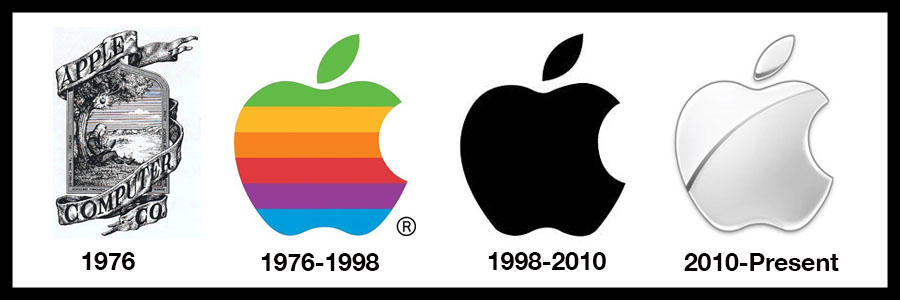
This is a brand:

What does this brand represent? Most people would say computers, iPhones, iPods: tech devices. But what would Apple say? How about this:


It is not about the devices themselves, it is about resisting drudgery, being empowered, becoming an individual. And not just any individual: 


Apple's products do more than simplify tasks, grant access to information, and connect you with others. Sure, these are the common benefits afforded by tech tools. A MacBook or iWatch, though? These provide access to an illustrious list of people who refused to follow the status quo. With Apple's products, we can all fulfill one of our deepest human urges: to give voice to our singular potential and idiosyncratic point of view:


These are all examples of incredibly powerful branding. Full disclosure: I have been an Apple user since I first used the IIe in high school. I like to think I am not as rabidly loyal as other Apple users. I have never queued up outside an Apple store for the latest iPhone. In fact, I use a Samsung. Still, I would be dishonest and deluded if I claimed not to be enchanted by these ads and this brand. 

But wait. There's more to this brand. For example, in the last few years, Apple has been at the center of a scandal regarding the working conditions of those building products like the iPhone. In short, workers have faced grueling factory conditions, long hours, and low pay. And just like that, the enchanting brand narrative becomes a whole lot more complex. Exactly what kind of company is Apple? I guess one that cares most about its profit margin. In other words, a typical company.

Now that I have most likely oversimplified a complex issue regarding corporate labor practices without even broaching my own complicity as a first world consumer, I'm going to switch the focus to social media, students, and language that has gained currency in education. 

Specifically, I want to address how the term "branding" has been embraced by many educators, as in "students need to think about their personal branding." To be sure, this terminology surfaces in conversations regarding digital citizenship, as in "students should be careful to cultivate their personal brand in a way that makes them appealing to colleges and employers." To cultivate a personal brand is to carefully tailor your appearance, so that your name and your being become synonymous with some defined qualities.

As I consider it further, I am not surprised that this metaphor has caught on. It is the language of capitalism. Since many of us grow up with the sense that capitalism is part of the natural order, it makes sense that its ideas would attach themselves to more than products in the marketplace. But capitalism is no more natural than any economic or political system. 

I know I have used this language. But I now realize that I have used it without considering the implications. No longer. 

Here are my concerns, in no particular order:
  1. The point of branding is to obscure the truth, at least some of the time. It is used to sell a version of a product or corporation that might not be completely honest. In fact, Apple illustrates this perfectly, as do many other brands, like McDonalds, Coca-Cola, etc. In short, branding attempts to insulate the company from taking responsibility for its actions. It is a form of distraction, not a statement of authenticity.

  2. The point of branding is to sell. Yes, we live in a capitalist society; however, as human beings I like to think we have a deeper purpose than selling and buying. When I talk to my students about branding, though, I cannot help but feel that I am reducing my students to consumers and marketers. 

  3. The point of branding is to focus unrelentingly on oneself and one's influence. Yes, students need to consider how they appear to others, whether online or off. But I am starting to wonder if the brand coaching students receive ultimately feeds another term I see more and more: digital narcissism. In his Ted talk, James Nachtwey powerfully states that "every story does not have to sell something. There's also a time to give." When we focus on personal branding, do we undermine discussions about qualities like generosity and kindness, which should be seen as ends in themselves, not as traits to nurture for some kind of payoff?

  4. The point of branding is to craft a message and then stick to it. But people are complex, certainly more complex than a product or company. I want my students to embrace the complexity of who they are, not shy away from parts of their beings that might compete with the message.

  5. The point of branding is to gain a competitive edge over competitors. Once again, I know we live in a capitalist society, but I resist using the language of the marketplace to define all aspects of our lives. Yes, I want my students to achieve success. Yes, parts of life require competition. But applying the language of competition to something like identity formation? It seems like a sure way to deny those parts of oneself that fit a prevailing narrative.

  6. To be branded is to be marked indelibly. See cows and horses for example.
With all of this said, I am not sure what term to use instead of "branding." As shorthand for crafting online identity, it is powerful. But there is no reason to believe that it is the only possible metaphor to use. For now, I will leave this as fodder for another post. Ideas?


Something I Love: 1 Guitar + 1 Voice

There's something special about playing guitar. Maybe it's the populist nature of the instrument: learn a few chords, a few patterns, and you're ready to go. Put it over your shoulder and you're ready to go: the porch, the campground, a friend's house. It is made to travel.

Woody Guthrie

When accompanying a voice, the guitar adds depth. It adds texture. It adds backbone to the experience being communicated. In the right hands, the guitar builds worlds. It's like a hammer, a wrench, a screwdriver: a tool so essential and simple, but also so damned vital.


Picking up the guitar fosters creativity. So many songs have been written. However, like the variations inherent in every chess match, the unique combinations of notes and chords are practically unlimited. And, as I've learned from experience, you're never too old to start. It's about dedication and the desire to have a space to create, both of which I value having in my life. Even if I can't sing. Yet.

Tuesday, August 11, 2015

20% Time: Writing a Song

Music has always been important for me. Songs conjure up moments in my life, from the pivotal events that loom large in my history to the smaller, quieter moments that fill most of my days.

For my wedding, it's "Mystify Me," sung just after my wife and I exchanged vows:

For my kids, it's "Sugarcube," a song that played once while we sat on our living room floor, eating plums from a farmer's market:

For senior year of high school? Perhaps it is "The Stars and Stripes of Corruption" a song brimming with anger, energy, and d.i.y. soul:

As I write this more and more titles spring to mind: Me, Myself, and I; So. Central Rain; Dig Me Out, and so many more. Oddly enough, though, while growing up, I never played an instrument. That changed at 38. I made it my goal to learn guitar by the time I was 40. I considered "learning guitar" to be knowing enough chords to play the songs I treasured by artists like Johnny Cash, the Ramones, REM. I succeeded. The guitar has become my primary hobby, my way to release, my key to a new language.

Now I have a new goal. I want to create music, not just play what others have written. But this leads to a question: how do I write a song?

I have a handful of riffs--3 or 4 chord cycles that seem catchy. However, it is mind-boggling to consider turning these isolated bits into a song with structure, integrity, maybe even vitality. I think I understand how pop songs work, not that it has to be a pop song. But something with a beginning, middle, and end, with lyrics that convey a story: this is what I want to produce. 

I am amazed by artists regardless of the medium. Whether it is producing a painting, writing a story, or crafting song, artists create a world where one did not exist before. I want to be a part of this.

20% Time: My Questions Ranked

Following is a list of questions that interest me. They are organized according to what I have wondered about most over the last year. As such, the number 1 question is the one that has been most on my mind. While this might not seem like the most important question to answer, it is the question that drives much of my thinking and which I would like to figure out immediately.

Question 1:
How do I write a song? (It's about more than just a song. Songwriting, like painting, moviemaking, and any other creative pursuit, amazes me. An artist begins with nothing and then creates a world. From scraps of ideas, a work gets developed that contains unity and an internal logic. I want to understand the different strategies and processes artists take to achieve this end.)

Question 2:
We need to live with less stress/learn to handle stress in a healthy way. How do we get this done?

Question 3: 
We need to refocus the education system so there is less emphasis on standardized tests and grades. How do we get this done?

Question 4:
Artists and journalists must be compensated financially for their labor; however, people have grown accustomed to getting content for free online. How do we change this tyranny of free?

Question 5:
How do I become more understanding of people with different experiences than me, especially when it comes to race?

Question 6:
Who is/are the people with the best ideas regarding learning how to use technology thoughtfully and creatively?

Question 7:
We need a political system less influenced by lobbyists and wealthy donors. How do we get this done?

Question 8:
Who has the most compelling ideas regarding our broken justice system that incarcerates minorities and the poor at far greater levels than whites and the wealthy?

Question 9:
How do I instill in my students (and kids) a love/respect for reading?